
If you are asking yourself should I do a first look on my wedding day? or what are the pros and cons of a first look? keep reading to learn why more and more couples are shifting to a resounding yes when deciding, and here is why:
While traditions are still honored, but they are being held with more intention—chosen rather than followed. One of the most considered decisions within that shift is whether to share a first look.
The benefits of a first look extend beyond logistics. They shape how the day feels, how it flows, and how it is remembered. When approached thoughtfully, it becomes less about stepping away from tradition and more about creating space for presence.
Privacy vs. Performance
A wedding day carries an inherent level of visibility. From the moment the ceremony begins, emotions are often experienced in front of an audience. For some, this heightens the moment. For others, it can create a subtle sense of pressure.
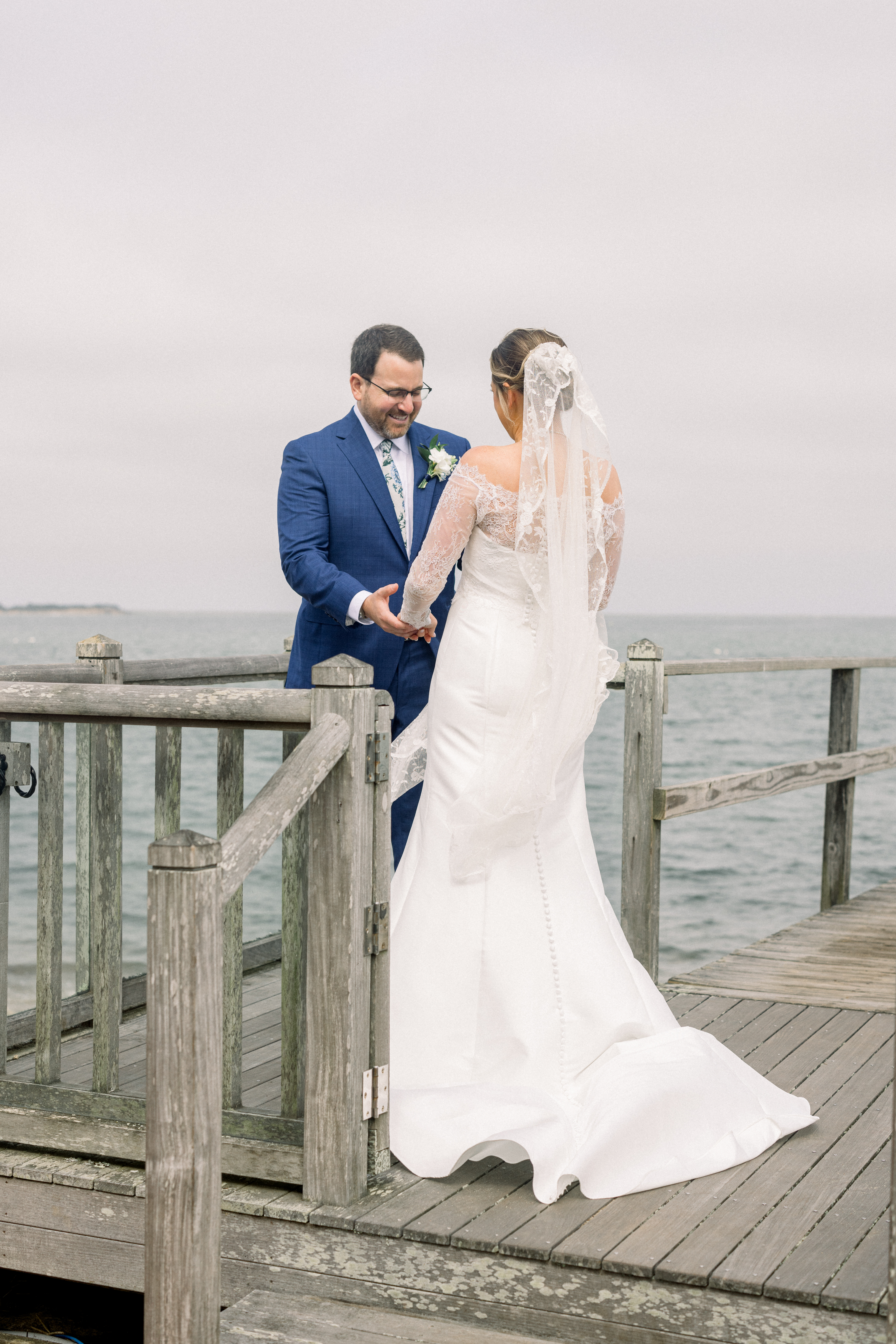
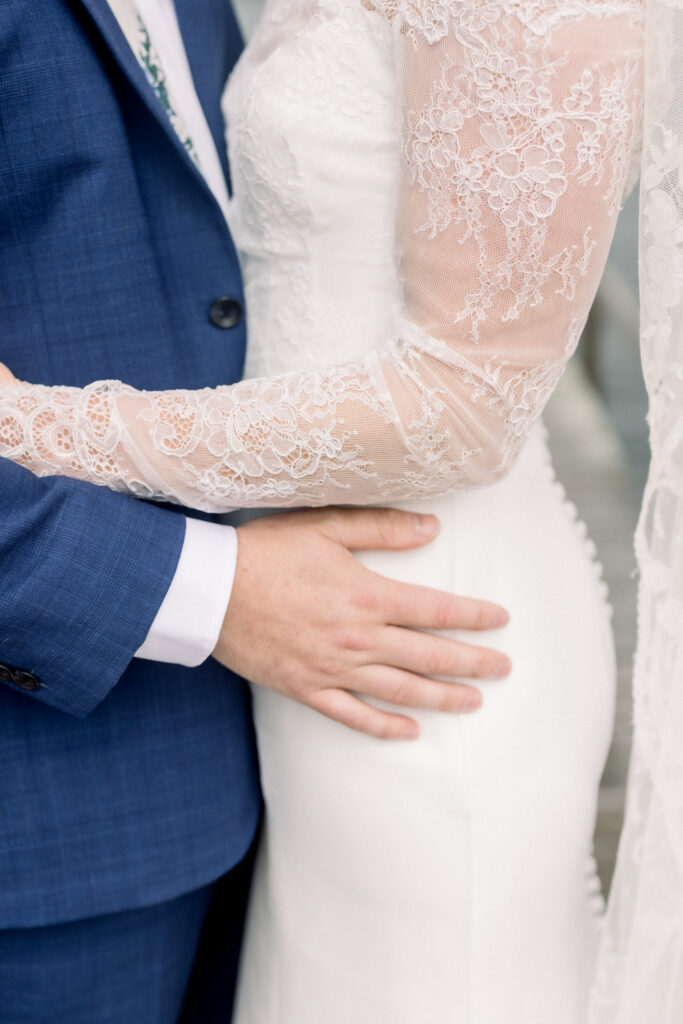
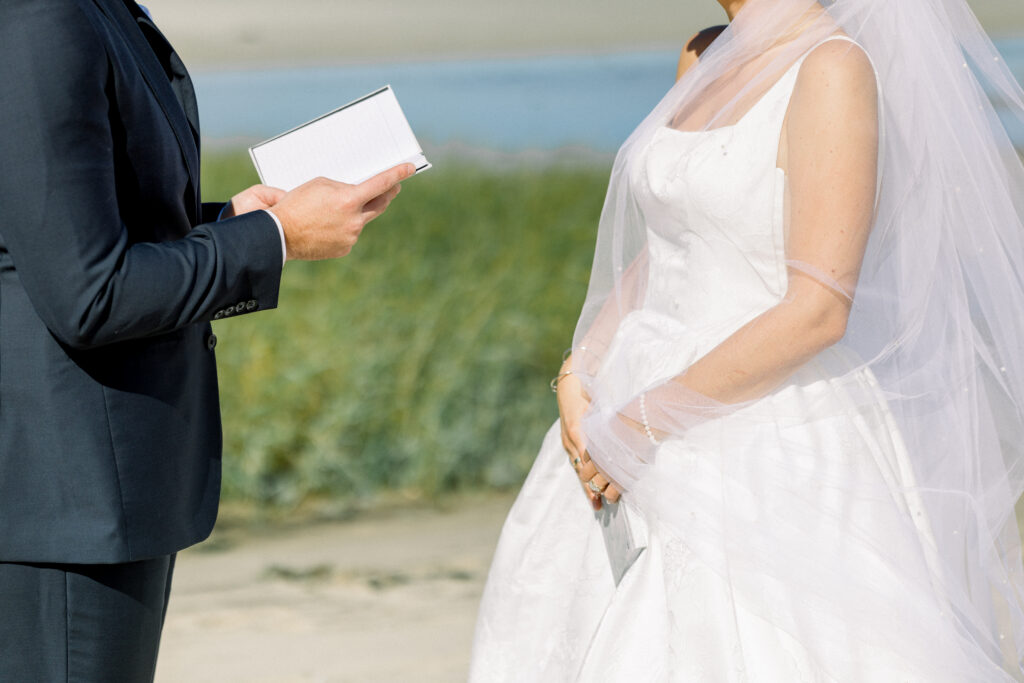
One of the most meaningful benefits of a first look is the opportunity to experience that initial connection in private.
Without an audience, the moment softens. There is no expectation to respond in a certain way. No awareness of being observed. It becomes an exchange that belongs only to the two of you—unhurried, unscripted, and grounded.
This privacy often allows for a deeper sense of presence. Couples are able to speak freely, to settle into one another, to take in the weight of the day before it fully begins. It creates a pause—a moment of stillness within what is otherwise a full and layered experience.
Rather than performing the moment, you are living it. For many, this shift alone redefines how the day begins.
The Impact on Your Wedding Timeline
Beyond the emotional layer, there are also practical benefits of a first look—particularly when it comes to the structure of the day.
A first look creates significantly more flexibility within your wedding day timeline by allowing many of your formal portraits to be completed before the ceremony. In addition to your portraits as a couple, this often includes your wedding party and immediate family as well.
This becomes especially valuable when you have a larger family or wedding party. As a general rule, it’s wise to allow at least 30 minutes for immediate family portraits and another 30 minutes for wedding party portraits. Without a first look, that hour has to come directly after the ceremony, leaving much less time for your newlywed portraits together or requiring you to step away from your reception later in the evening.
By shifting these portraits earlier in the day, your timeline naturally feels more relaxed. You gain more uninterrupted time to celebrate with your guests, enjoy cocktail hour, and create the romantic portraits that often become the images you’ll treasure most for decades to come.
It also reduces the sense of urgency that can sometimes accompany post-ceremony portraits. There is more time to move with intention. More space to step into different areas of the property. More flexibility if lighting or timing shifts.
From a photographic perspective, this expanded timeline often leads to a more varied and cohesive gallery. From an experiential perspective, it allows the day to unfold with greater ease.
The structure supports the experience, rather than competing with it.
Lighting Considerations and Visual Consistency
Light shapes everything.
It defines mood, tone, and the way a moment is preserved. One of the more understated benefits of a first look is the ability to work with light in a more controlled and intentional way.
When portraits are scheduled before the ceremony, there is often greater flexibility in choosing the time of day that offers the most refined light. Earlier in the day, particularly in overcast conditions or softened afternoon light, the result tends to feel more balanced and consistent.
In contrast, post-ceremony portraits are often dictated by timing rather than conditions. Depending on the season, this can mean working with harsher light or limited daylight, especially in the later months.
A first look creates options.
It allows for portraits in softer light, which translates into a more cohesive gallery—particularly for those drawn to a film-inspired aesthetic. Skin tones remain natural. Highlights are preserved. The overall tone feels aligned from beginning to end.
This consistency is subtle, but it shapes the final collection in a meaningful way.
The Difference Between a First Look and the Aisle Moment
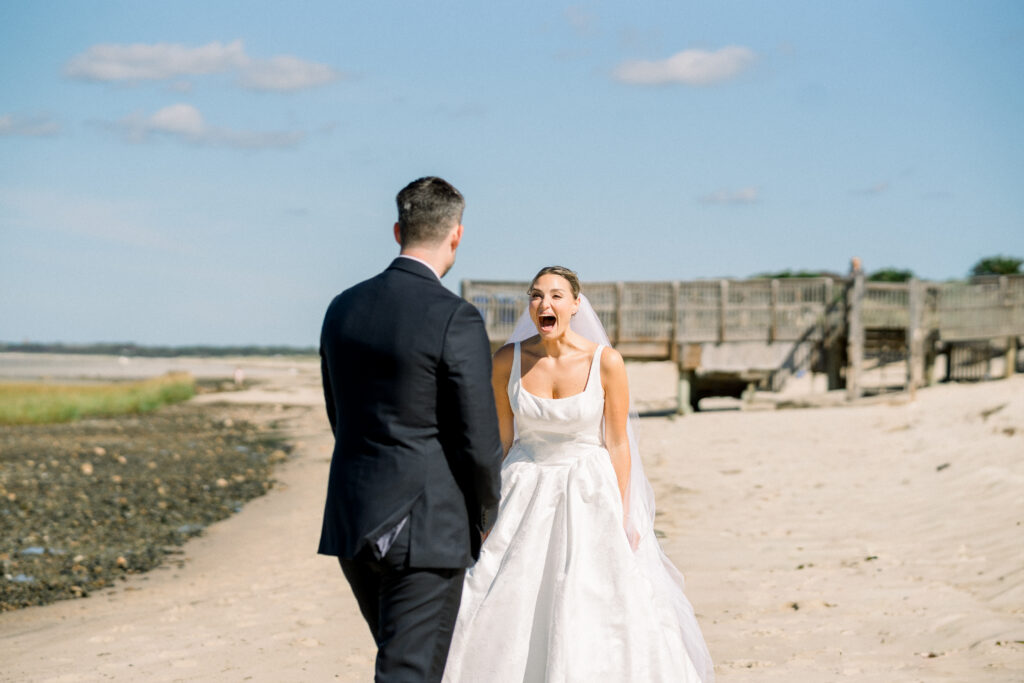
There is often a hesitation around first looks rooted in a single question: will it take away from the ceremony?
In practice, the two moments serve entirely different purposes.
The benefits of a first look do not replace the experience of seeing one another at the aisle. They redefine it.
During a first look, the focus is inward. It is quiet. Personal. Grounded in privacy.
During the ceremony, the focus expands. It becomes collective. There is a shared awareness between you, your guests, and the significance of what is taking place. The music, the setting, the presence of family—all of it contributes to a different kind of emotional experience.
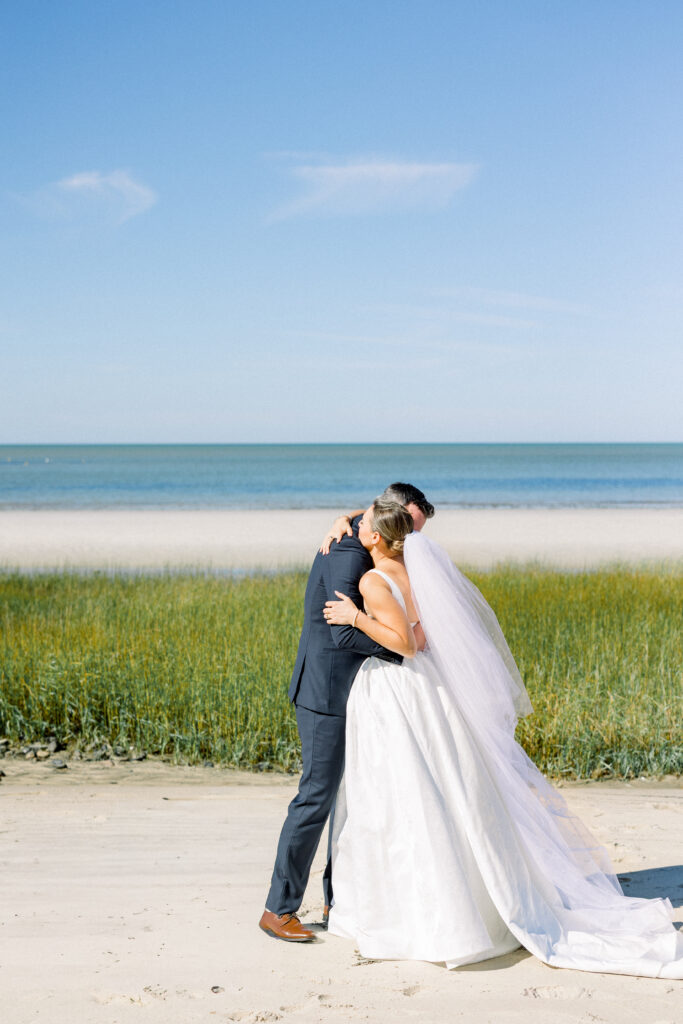
Couples who choose a first look often find that the ceremony moment remains just as meaningful, if not more so. Without the initial rush of emotion or nerves, there is space to be more present. To take in the details. To truly see one another as you walk forward.
Rather than diminishing the aisle moment, a first look often allows it to deepen.
It becomes less about anticipation and more about recognition.
A Considered Choice
The decision to share a first look is not about following a trend. It is about aligning the structure of the day with how you want it to feel.
The benefits of a first look are both emotional and practical. It offers privacy in a day that is otherwise shared. A first look creates a timeline that supports presence rather than urgency. It also allows light to be approached with intention. And they preserve the ceremony as its own distinct, meaningful experience.
For some couples, tradition will remain the guiding force. For others, a more layered approach will feel aligned.
There is no singular right choice.
Only the one that allows you to move through the day with clarity, ease, and a sense of connection to what matters most.
Brianna Graca Weddings, a Newport Rhode Island Wedding Photographer
If you’re considering the benefits of a first look and how it might shape the rhythm of your wedding day, I approach each timeline with intention—balancing light, space, and the overall experience.
Inquire through my contact page to begin a tailored proposal and thoughtfully design a photography approach that feels aligned with your vision.


